
Destination
Torres del Paine

The Torres del Paine commune, located in Última Esperanza Province, is internationally renowned for being home to one of the planet’s most iconic landscapes: Torres del Paine National Park, a UNESCO Biosphere Reserve and considered among the world’s top nature destinations. Its unique geography—mountains, glaciers, turquoise lakes, vast steppes, and exceptional biodiversity—makes it a must-visit for trekking lovers, photographers, adventure seekers, and conservation-minded travelers.
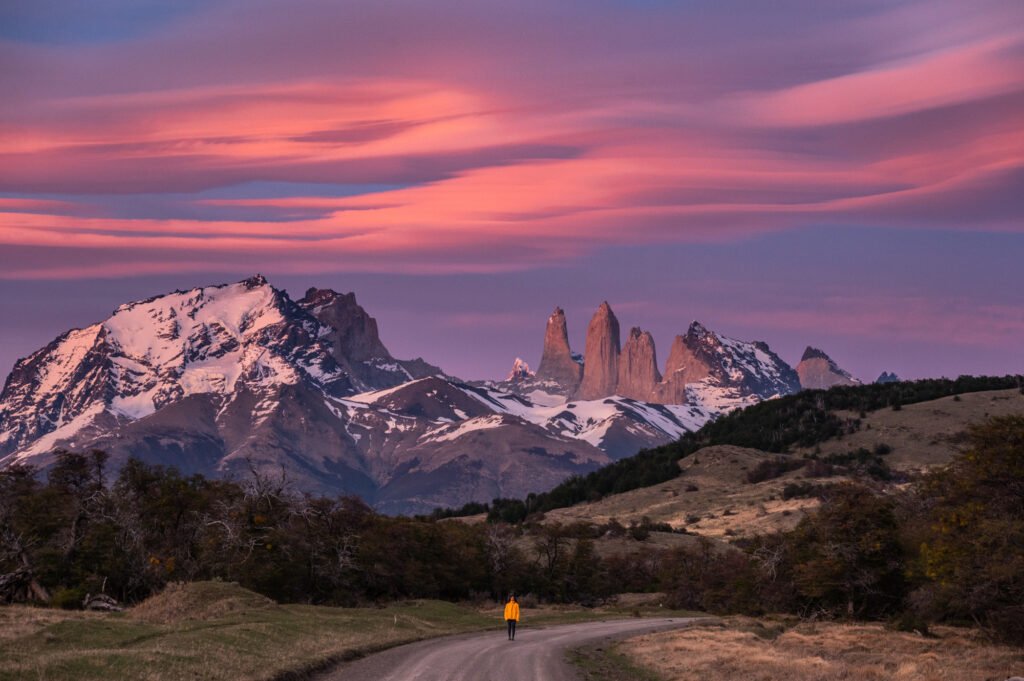
From Cerro Castillo, the commune’s administrative center, tourism and livestock ranching coexist in harmony within a protected natural environment. The area provides services for visitors who want to explore the scenic route to the park, connecting Patagonian rural culture with some of the most spectacular landscapes in the Southern Hemisphere. Torres del Paine invites you to live truly transformative experiences and connect deeply with wild Patagonia.
What to do in Torres del Paine
Full day
This excursion can be done by booking a tour from Puerto Natales or from accommodations either around the park or inside it. It can also be done independently by renting a vehicle.
It is one of the most popular excursions, as you can admire the imposing Paine Massif from the main road, visiting viewpoints, waterfalls, lakes in different shades, the park’s flora and fauna, and iconic landmarks such as the Torres del Paine and the Cuernos del Paine, among many others.
Grey Lake and Glacier
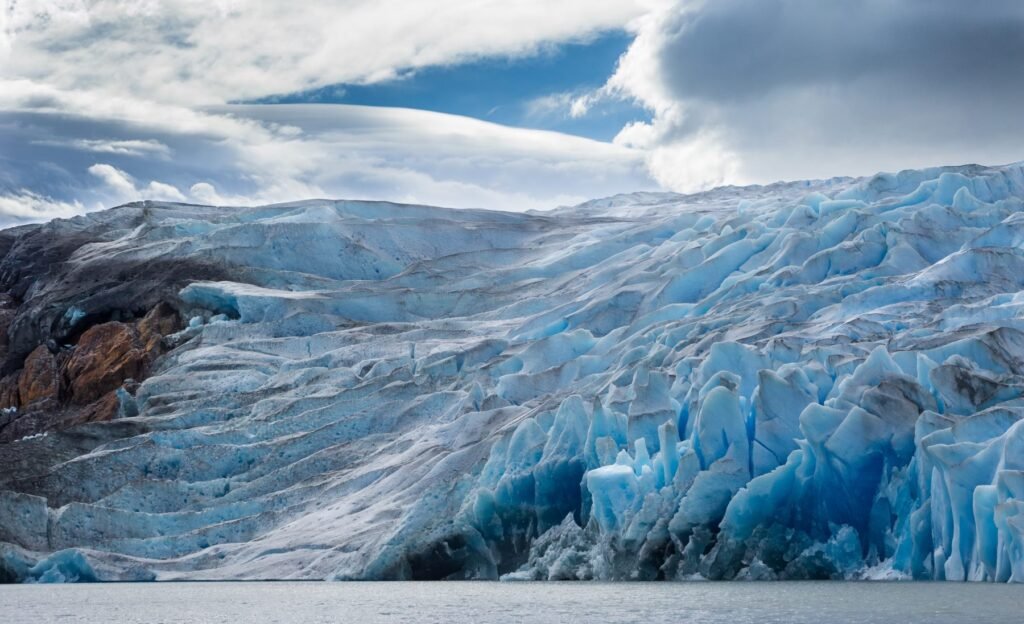
Located 18 km from the Administration Office, in the eastern sector of the park, Grey Ranger Station is the starting point for a walk that crosses the bridge over the Pingo River and continues to the lakeshore, where you can see floating icebergs. From here, you can also take a boat trip on the lake for views of the glacier.
Salto Grande Waterfall
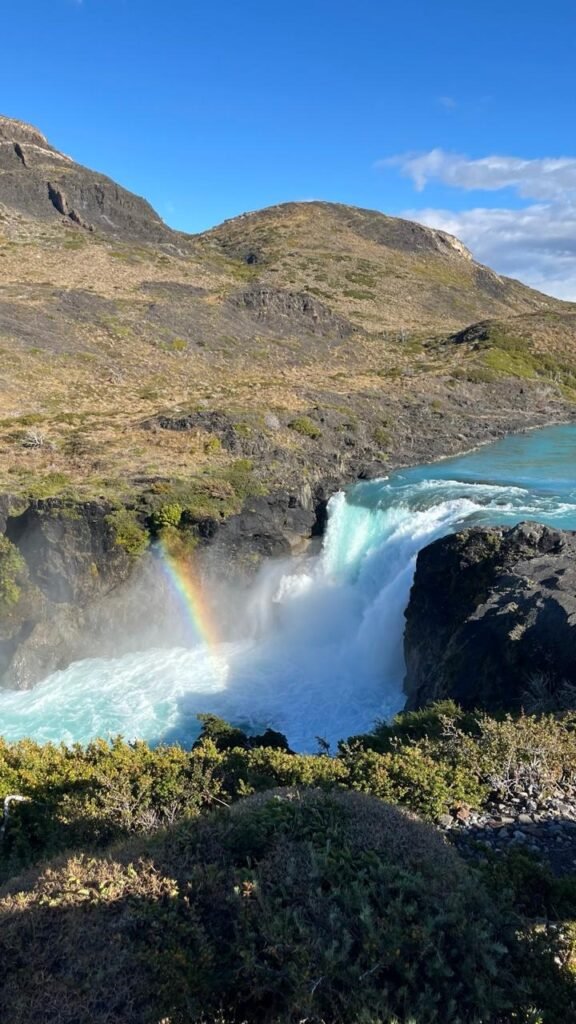
Located in the Pehoé sector, just 2 km off the main road. From the parking area, it’s a 5-minute walk to the viewpoint. If you want to reach the Los Cuernos Viewpoint, continue along the marked trail. From there, a walk of about one hour follows the shore of Lake Nordenskjöld, leading to one of the best panoramic views of the Paine Massif.
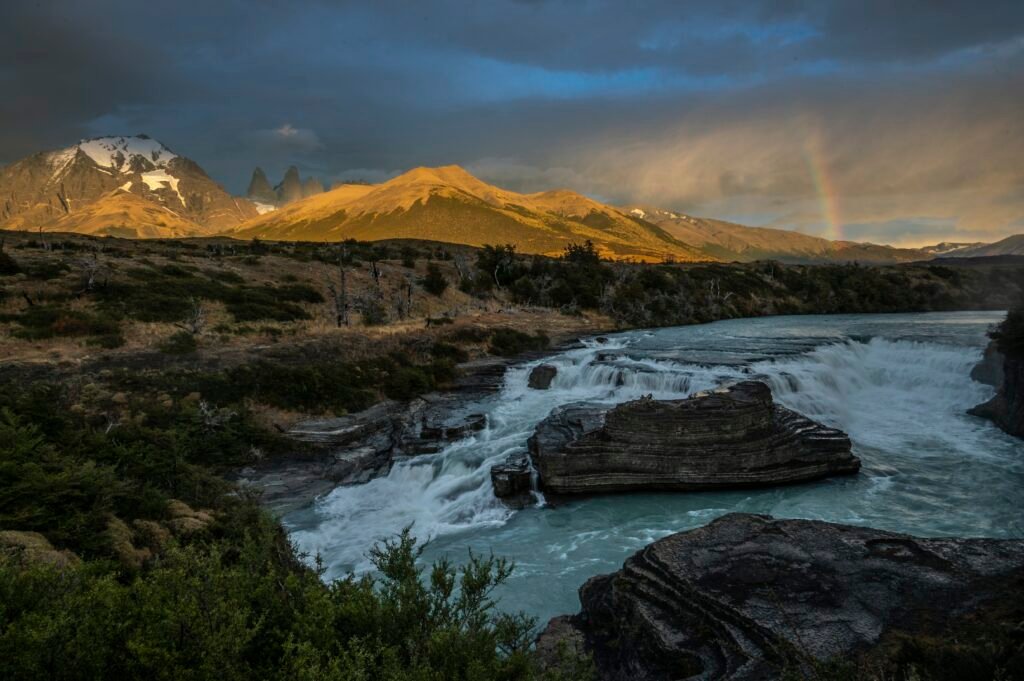
Paine River Waterfall
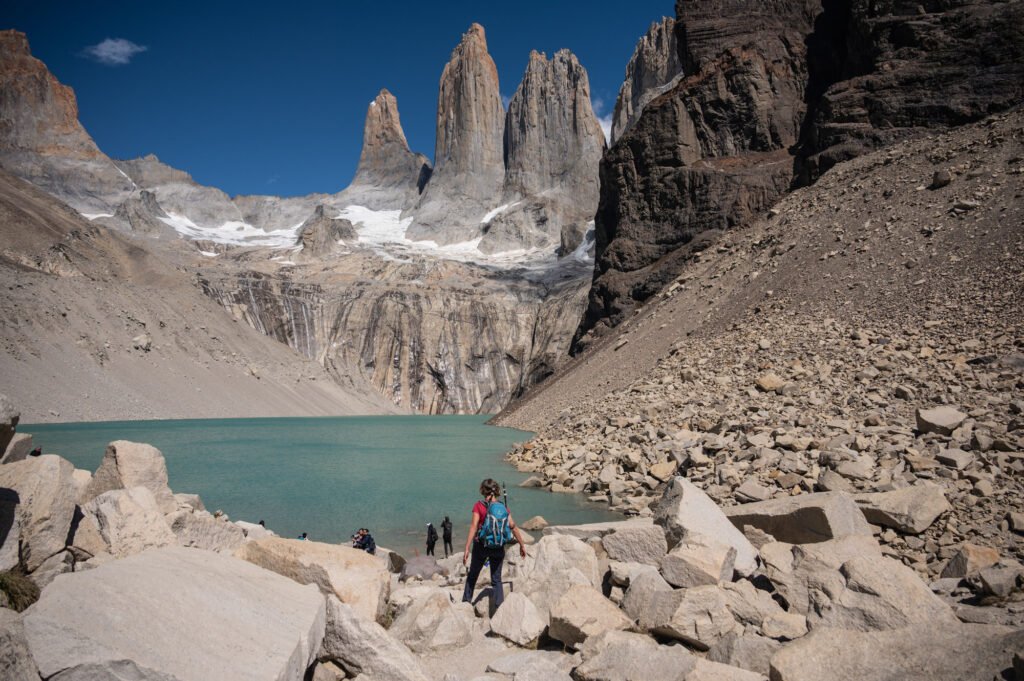
Located on the Paine River in the Laguna Amarga sector, along the road to Laguna Azul. From this point you can see the Torres del Paine (De Agostini, south; Central and Monzino, north)—the three granite spires that gave the park its name.
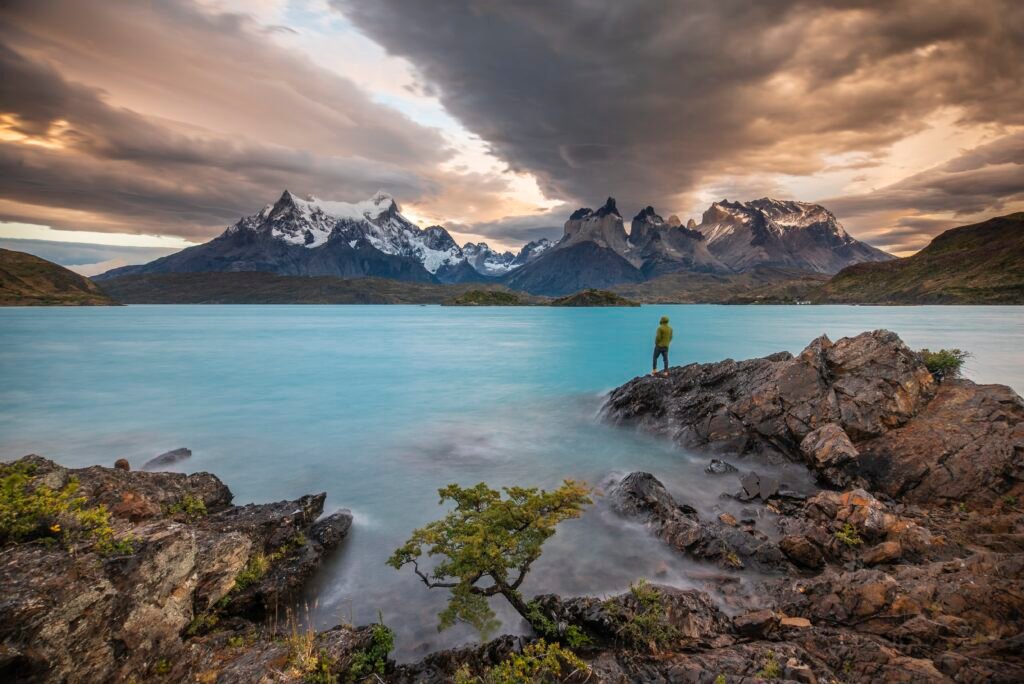
Lake Pehoé
The lakeshore is one of the best places to view the Cuernos del Paine, combining dramatic mountain scenery with the turquoise color of the water.
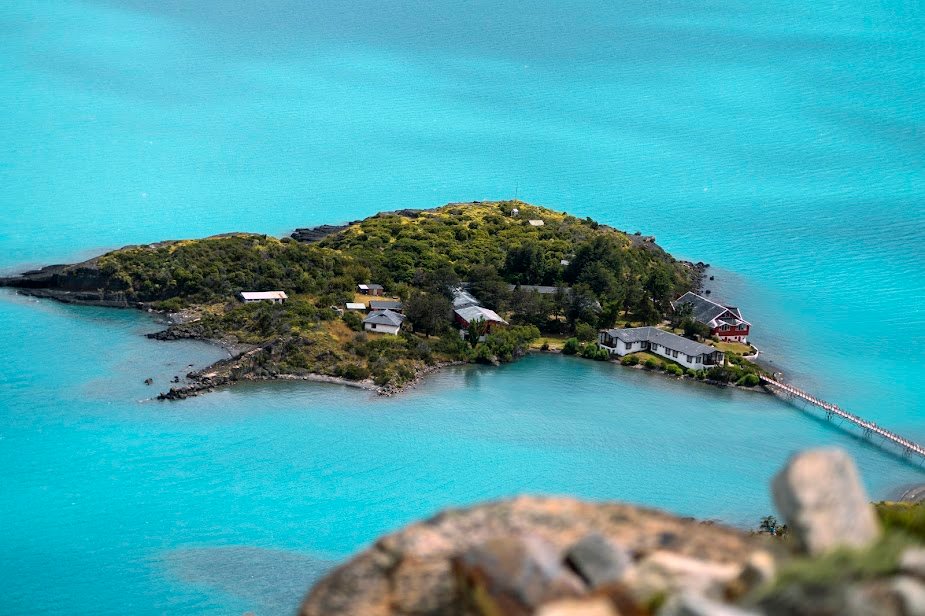
Laguna Azul (Blue Lagoon)
From the area near Laguna Azul Ranger Station, you can enjoy the best view of the Torres del Paine without having to do a trek. This zone has an attractive microclimate, reaching temperatures of up to 25°C in summer.
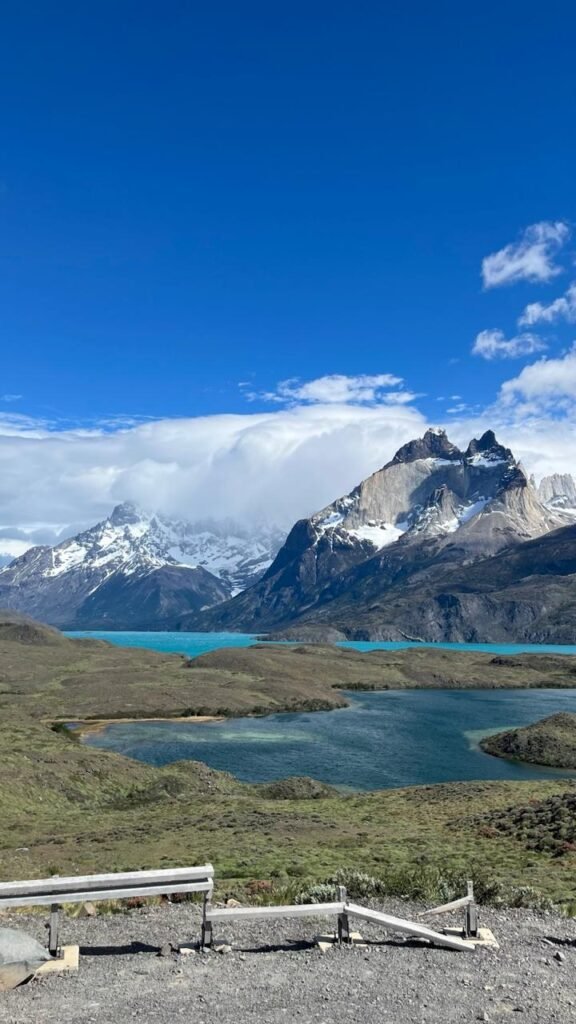
Nordenskjöld Viewpoint
Located beside the park’s main road, it offers a spectacular view of the Paine Massif and Lake Nordenskjöld, with the Cuernos del Paine as the main highlight.
Hiking
There are several short, easy trails accessible from the road, including:
Paine Massif Circuit
This circuit, which includes the W Trek, begins at the visitor center of the Cerro Paine Reserve. It continues north to reach the Serón sector. As you skirt the Paine massif along its northern side, you’ll encounter Dickson Lake and the John Gardner Pass—the highest point of the circuit at 1,241 meters—offering privileged views of the Southern Ice Field. The trail later connects with the W Trek route.
The trail is well signposted and can be done independently or through an agency. It is important to book accommodation in advance due to high demand, and because having reservations is mandatory to access mountain trails.
There are different accommodation options located at strategic points along the route: campsites, refuges, and in some areas cabins and domes. Each sector also has small stores for basic supplies, hot-water showers, and meal services.
Difficulty: Medium–High
Distance: 134 km
Duration: 7–10 days
W Trek
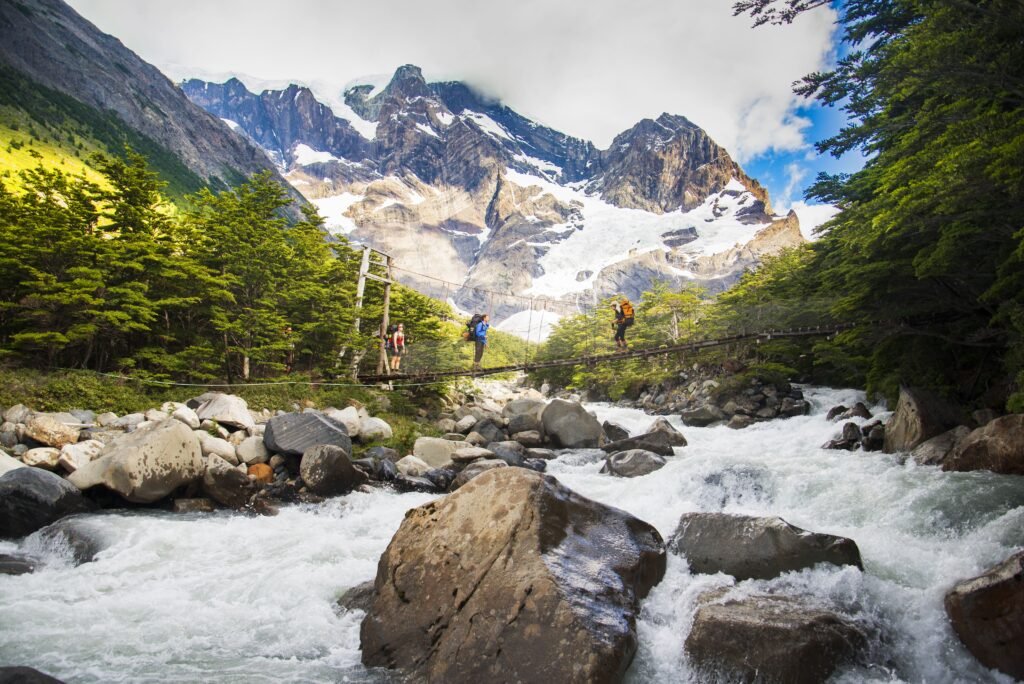
The W Trek follows the most iconic highlights of Torres del Paine National Park, including the Base of the Towers, the French Valley, and the Grey Glacier viewpoint.
The trail is very well signposted and can be done independently or through an agency. It’s important to book accommodation in advance due to high demand, and because having reservations is mandatory to access mountain trails.
There are different accommodation options located at strategic points along the route: campsites, refuges, and in some areas cabins and domes. Each sector also has small stores for basic supplies, hot-water showers, and meal services.
Difficulty: Medium–High; previous experience and good physical condition recommended.
Distance: 76 km
Duration: 4–5 days
Base Torres
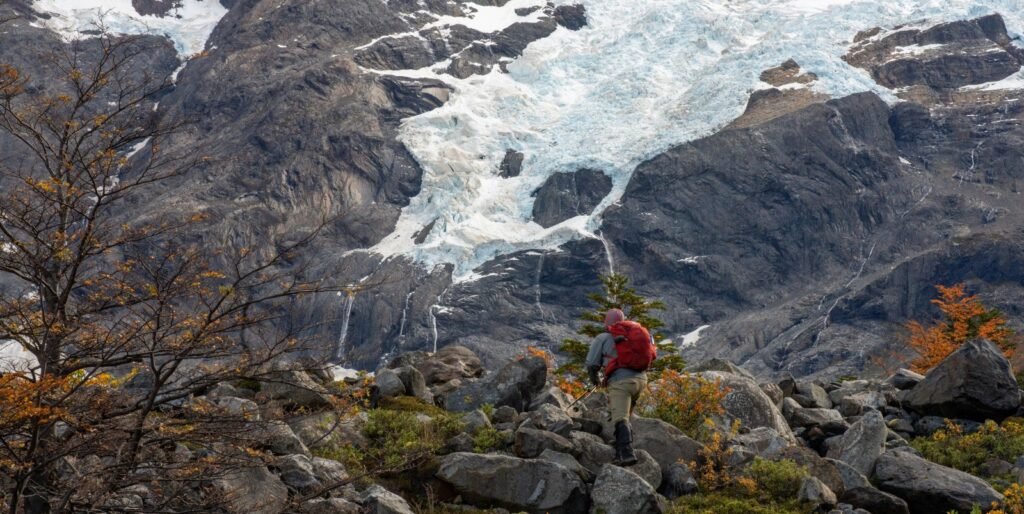
The hike to Base Torres in Torres del Paine is one of the park’s most iconic treks. It usually starts in the Laguna Amarga / Hotel Las Torres area, following the Ascencio Valley, passing through a lenga forest and a refuge/campsite, before tackling the most demanding final section: a steep climb up a moraine. The reward is the Base Torres viewpoint, with views of the three granite towers and the turquoise lagoon at the foot of the mountains. It’s a full-day excursion with a high level of effort, best done in good weather, with layered clothing and proper footwear.
Cóndor Viewpoint
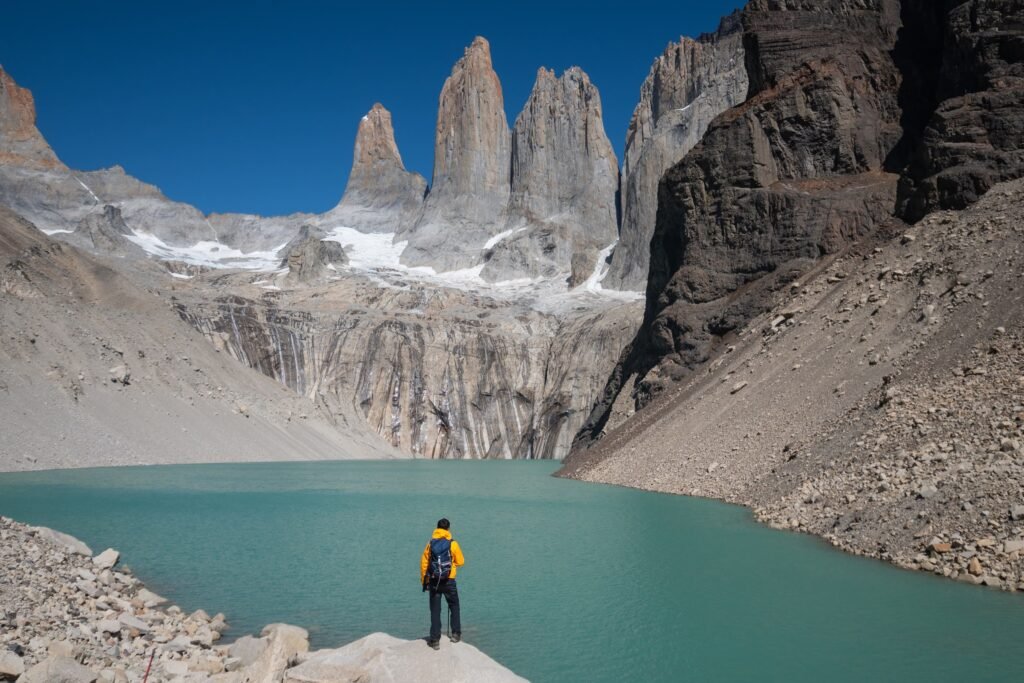
Located near Pehoé camping area, beside the main road. It lets you learn about the flora and microfauna on the slopes of Sierra del Toro, with privileged views of the Paine Massif.
Duration: 3 hours.
Ferrier Viewpoint
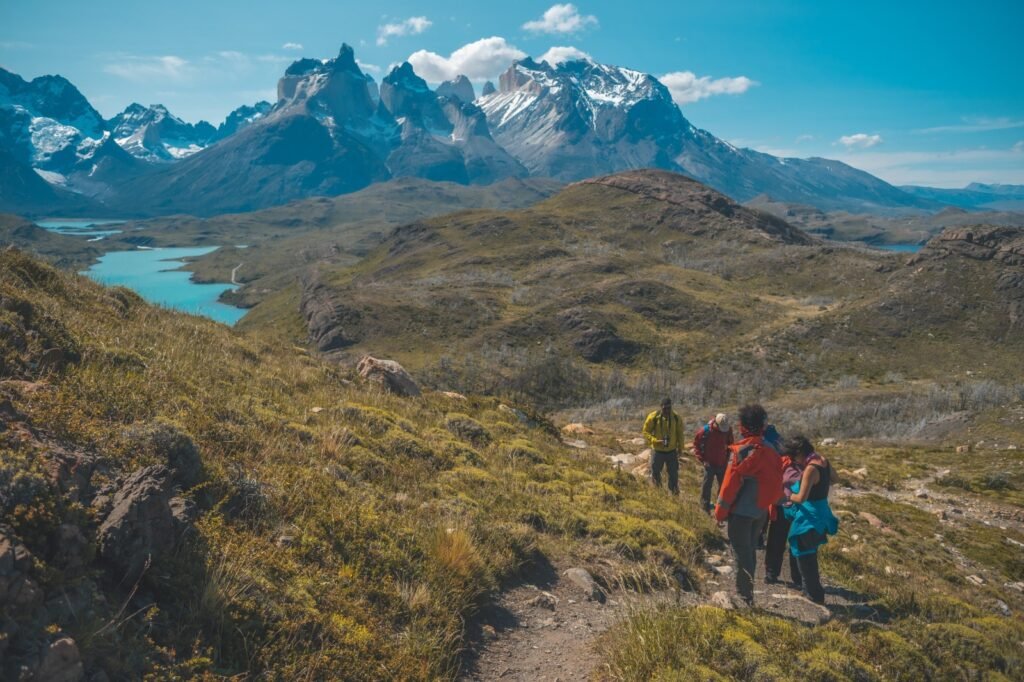
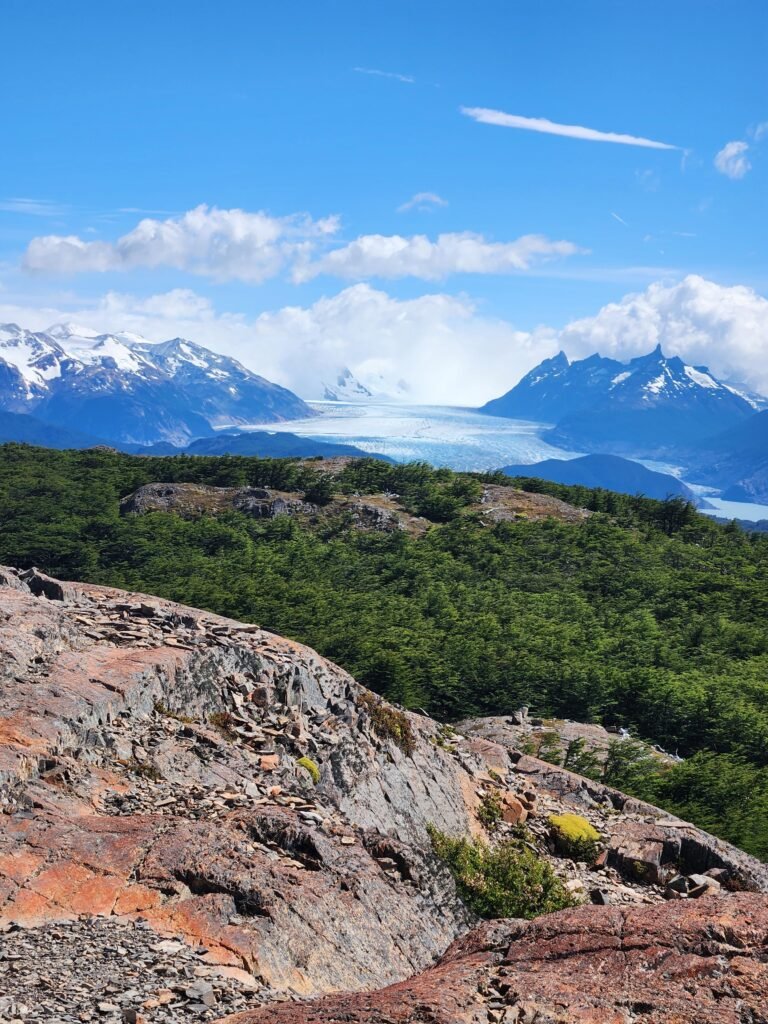
From the parking area at Grey Ranger Station, you can also hike up Cerro Ferrier. The viewpoint is about 1–1.5 hours away on foot and offers spectacular views of the Paine Massif, the Southern Patagonian Ice Field, and a panorama of almost all the lakes in the park. A must.
Los Cuernos Viewpoint
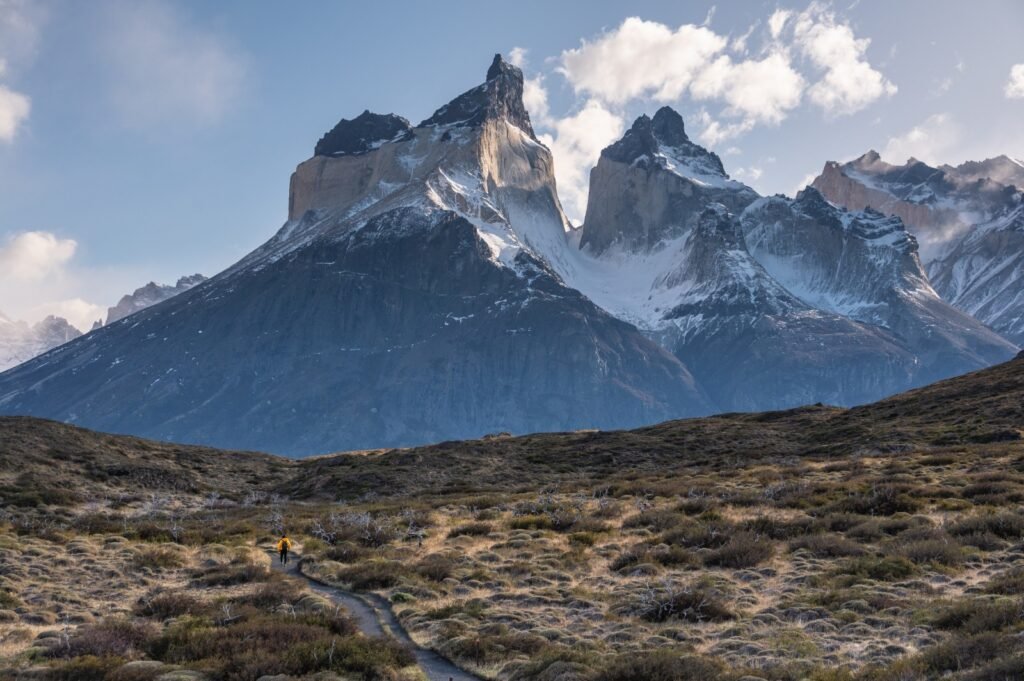
Starting near Salto Grande parking area, this easy trail takes about one hour to reach a viewpoint on the shore of Lake Nordenskjöld, offering an impressive close-up view of the Cuernos del Paine.
Duration: 2 hours round trip.
Before starting any of these hikes, do not forget to check trail conditions and difficulty with the park ranger.
IMPORTANT INFORMATION / MANDATORY RULES
IMPORTANT INFORMATION / MANDATORY RULES
In order to protect natural resources, minimize environmental impacts, and ensure the safety of all visitors, it is essential to follow the rules below within the park. Making fires is strictly prohibited; the use of camping stoves is only allowed in areas specifically designated for that purpose. It is also mandatory to remove all trash and any polluting items, and to camp only in authorized areas.
Please be cautious: this park is known for its changeable weather and complex geography, so it is recommended to always use appropriate equipment. Failure to comply with these rules may result in legal penalties or even expulsion from the park. Remember that any irresponsible or careless act can cause irreversible environmental damage and is punishable under the law.
If you plan to visit the park for the day, please consider the following:
There are more than 100 km of internal roads and many scenic places to stop and enjoy the landscape. For this reason, we recommend arriving very early to make the most of your time and enjoy the park at a relaxed pace.
- If you do not have your own vehicle and do not wish to rent one, we suggest booking a “full-day” tour, offered by various travel agencies in Puerto Natales and Punta Arenas.
- These agencies know the travel times well and include the main highlights.
- It is not possible to do a day visit using public transportation.
- There are no ATMs or gas stations inside the park, so you must stock up in Puerto Natales.
- At the park’s refuges, campsites, and lodges, there are small stores that sell non-perishable food and basic gear for starting a hike, as well as basic restroom facilities.
- Hiking trails have closing times.
- During the winter season (May–September), a guide is mandatory to do the W Trek. Book accommodation in advance during the summer season (November–March).
- The use of drones is prohibited in all areas of the park.
How to Get to Torres del Paine
How to Get to Torres del Paine
By land:
FROM PUERTO NATALES: You can get there by regular bus, a tourist transfer (shared or private), or a rental car. Most services enter through the park entrances.
FROM PUNTA ARENAS: You first travel to Puerto Natales, and from there continue on to Torres del Paine.
By private/rental vehicle: This option offers the most flexibility for schedules, stops, and viewpoints. It is recommended to consider the changeable weather, strong winds, and to ensure you have enough fuel before entering the park.
By sea:
Fly to Puerto Natales or Punta Arenas, then continue overland to Torres del Paine National Park. From Puerto Natales, this is the most direct access route.
By air:
There is no maritime access to Torres del Paine National Park.
.